
Door sections and reinforcement
Panels, stiles, hinges, and struts must work together to support the selected door size, weight, and approved wind-load configuration.
Serving Fleming Island, Florida
Garage door installation · Fleming Island, Florida
Choose a door that fits your opening, suits your property, and operates smoothly with properly matched tracks, springs, hardware, and opener settings.
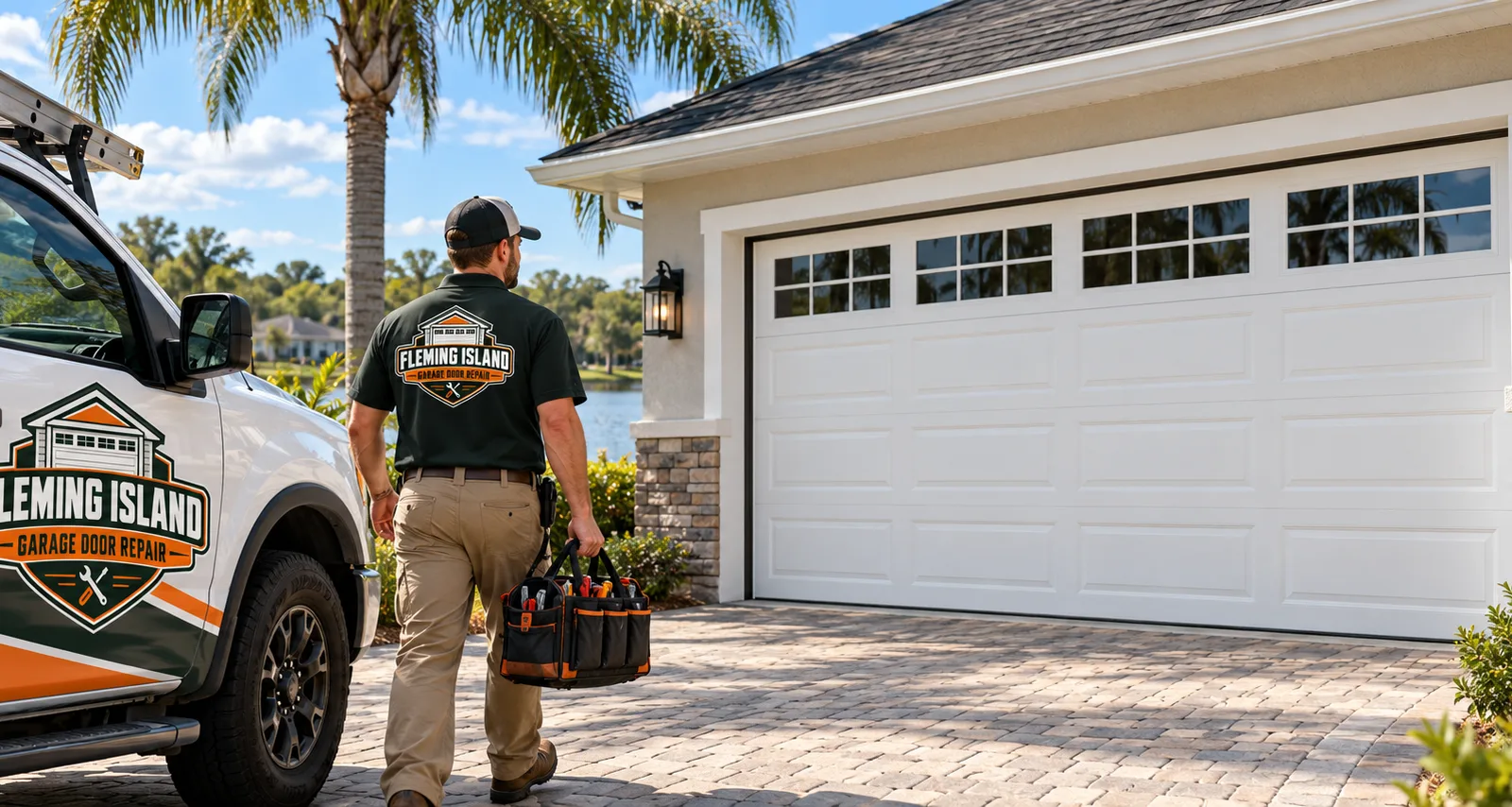
Measured for the complete system
Garage door installation in Fleming Island, FL starts with the opening, not a catalog photo. Fleming Island Garage Door Repair considers the opening dimensions, available headroom and side room, door weight, track layout, spring system, opener compatibility, and exterior appearance before the installation plan is set.
A replacement door affects security, daily access, weather exposure, and the look of a large part of the home. The new system should move without binding, sit correctly in the tracks, close evenly at the floor, and remain balanced when disconnected from the opener. Those results depend on correct measurements and properly matched components.
Fleming Island properties also face humid air, frequent rain, strong sun, and seasonal storms. Galvanized hardware, durable exterior finishes, intact perimeter seals, and corrosion-resistant options can make sense in this local climate. Wind-load requirements may also affect the door and reinforcement package selected for a specific property. Product approval and permit requirements should be confirmed for the exact address and proposed door.
Materials, insulation, and appearance
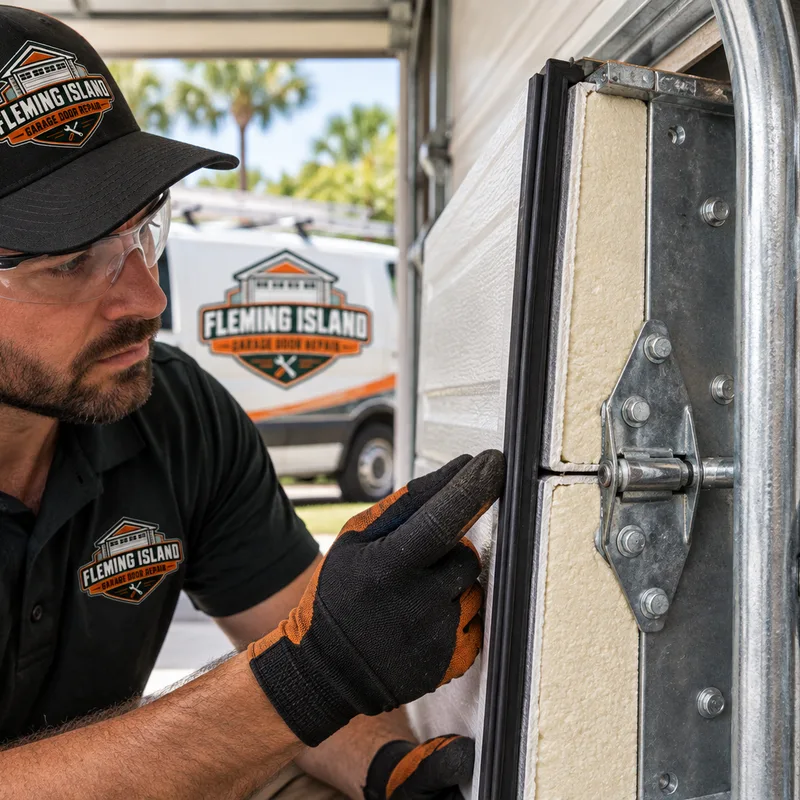
Steel sectional doors are a common choice because they offer a broad range of panel designs, colors, window configurations, and insulation levels. Single-layer doors are generally lighter and more economical. Multi-layer doors add backing, insulation, or another steel skin for greater rigidity and a more finished interior surface.
Insulation is commonly described by R-value, but the best choice depends on how the garage is used. An attached garage, a room over the garage, or a space used as a workshop may justify an insulated door. A detached garage used mainly for storage may have different priorities. Weather seals around the jambs and across the bottom remain important with either design.
Windows can add daylight and coordinate with the house, while solid upper panels offer more privacy. Decorative hardware, panel profiles, and color should be selected with the home's trim and proportions in mind. The door must still meet the structural and dimensional needs of the opening.
Every component works together
Panels, stiles, hinges, and struts must work together to support the selected door size, weight, and approved wind-load configuration.
Vertical and horizontal tracks need secure mounting, correct spacing, and proper alignment. Roller type also affects operating noise and movement.
Torsion or extension springs counter the door's weight. Spring size and configuration must match the installed door rather than the old system by assumption.
A bottom seal and exterior perimeter seal help limit wind-driven rain, light, insects, and debris around the closed door.
Door balance, travel limits, force settings, photo-eye alignment, and attachment points must be checked when an opener is connected.
A replacement project may include taking down the existing door and hardware, installing the new assembly, testing manual balance, and verifying powered operation.
From measurement to final testing
Fleming Island Garage Door Repair reviews the door width and height, framing condition, floor level, backroom, headroom, side clearance, existing hardware, and electrical opener setup.
The installation plan identifies the door construction, panel design, color, windows, insulation, track type, spring configuration, reinforcement, seals, and opener compatibility.
The scope should identify what is being installed, what will be removed, and whether framing adjustments, an opener, controls, or other components are included.
Old panels and hardware are taken down in a controlled sequence. Garage door springs remain under significant tension and require appropriate tools and handling.
Tracks, panels, hinges, rollers, cables, springs, reinforcement, and seals are assembled and adjusted. The door is then checked for even travel and manual balance.
If an opener is connected, travel limits, force settings, controls, photo eyes, and manual release operation are tested. Basic use and maintenance points are reviewed before completion.
Alignment, balance, and compatibility
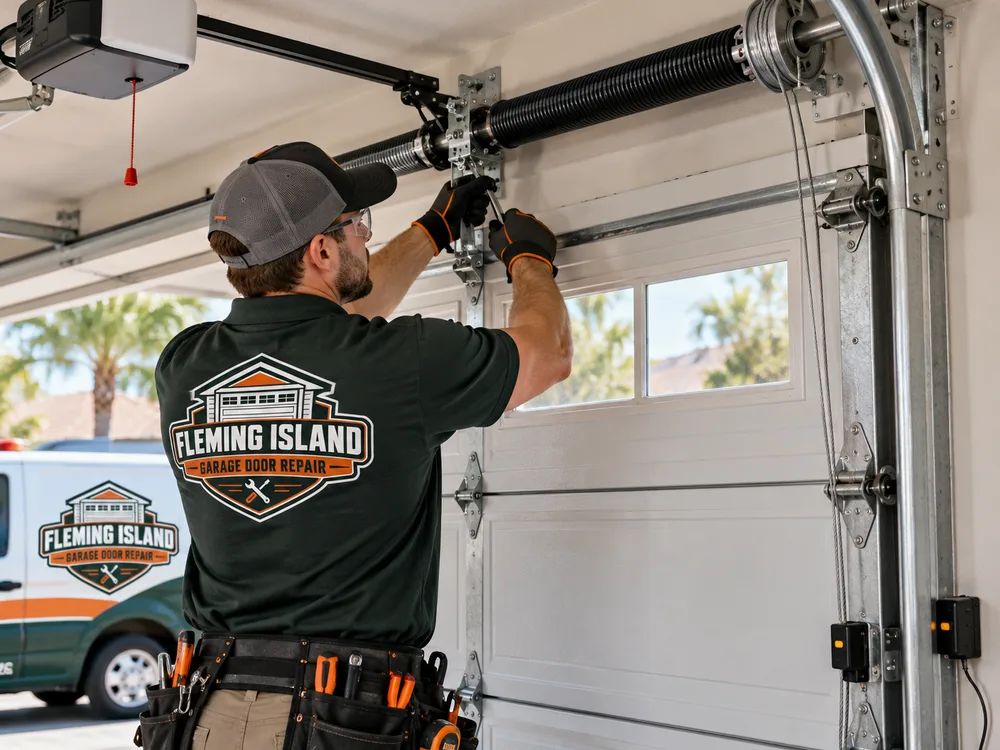
A garage door can look level while still being poorly balanced or incorrectly aligned. The installation should be evaluated through its entire travel, both manually and with the opener. When disconnected, the door should not feel excessively heavy or move unpredictably. Cables should remain correctly seated on their drums, rollers should travel cleanly, and the bottom seal should meet the floor as evenly as the opening allows.
The opener pulls and guides a balanced door; it should not compensate for incorrect springs or binding tracks. An existing opener may be reused when its condition, lifting capacity, rail arrangement, and safety equipment suit the new door. If another garage system needs attention, garage door repair in Fleming Island can be assessed separately without confusing that work with the new-door scope.
Before selecting a door, consider vehicle clearance, storage near the tracks, ceiling-mounted equipment, pedestrian access, and how often the garage is used. These details can influence track choice, opener position, and window placement.
Finished doors and installation details
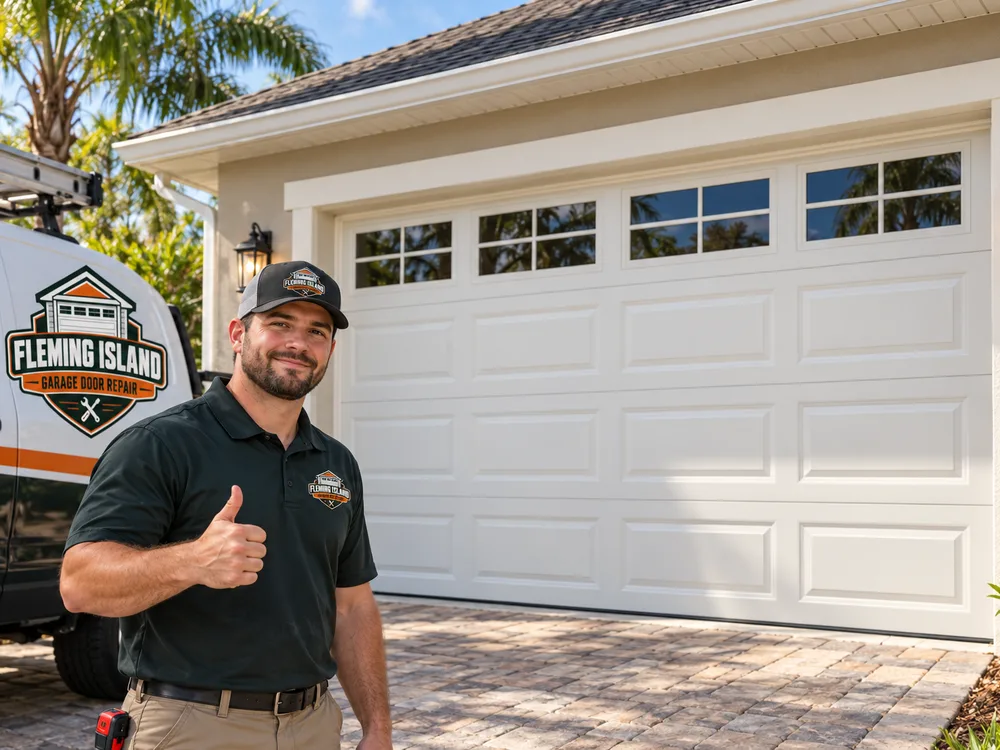
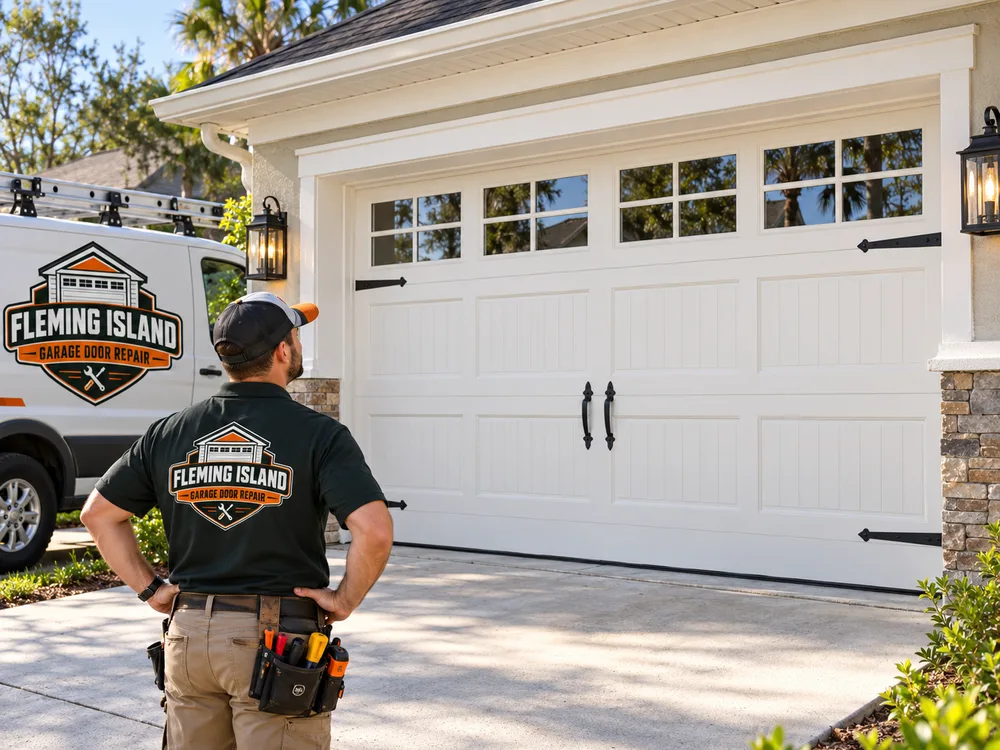
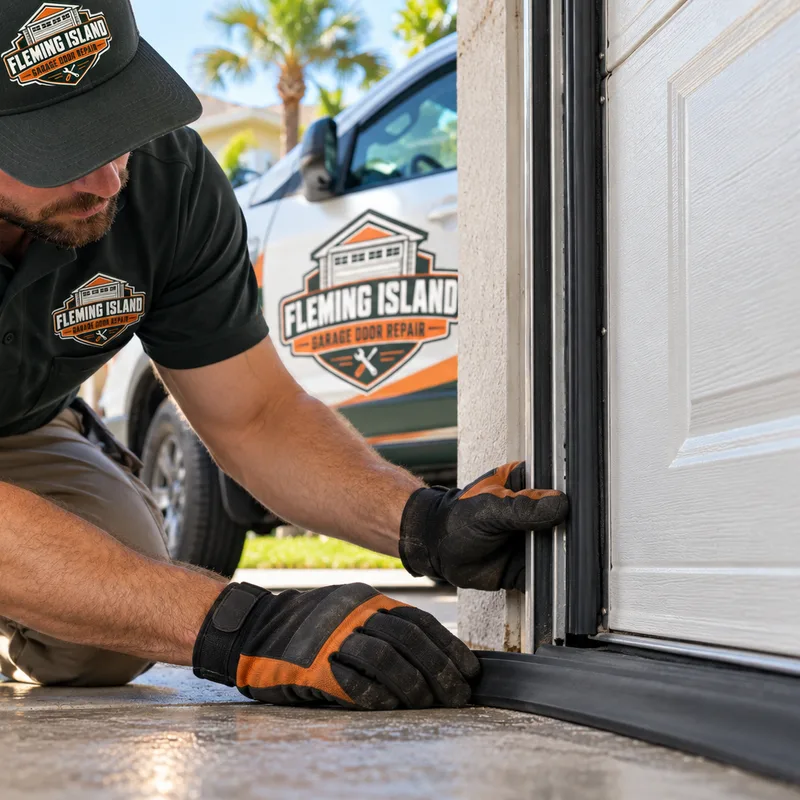
Discuss the opening, preferred style, insulation needs, and opener setup before choosing a new garage door system.
CALL NOW: (904) 977-2180Planning and installation guidance
The required door specification depends on the property address, opening, applicable building code, and approved product documentation. A Florida garage door may need a tested wind-load design with specified reinforcement and attachment details. The exact requirement should be verified before ordering because adding struts to an unsuitable door does not create an approved wind-rated assembly.
An existing opener may be reused if it is in suitable condition and compatible with the new door's weight, height, balance, track arrangement, and required controls. Its rail, attachment point, travel settings, force settings, photo eyes, and manual release should all be checked during installation.
An insulated door is often worth considering for an attached garage, a conditioned workspace, or a garage with occupied rooms nearby. Insulation can also make steel sections more rigid and provide a finished interior face, depending on construction. R-value, layer count, perimeter seals, and the garage's actual use should guide the choice.
Existing tracks should be reused only when the door manufacturer permits it and the tracks match the new door's size, thickness, roller arrangement, weight, and required geometry. New doors are commonly installed with their specified track and hardware because mixing incompatible components can cause poor travel or unsafe operation.
Clear vehicles, stored items, and hanging objects away from the door opening, tracks, and opener work area. Installers need safe access along both jambs and beneath the horizontal tracks. Secure pets and preserve a clear route between the driveway and garage.
Plan the right system
The opening, current system, preferred door style, and how the garage is used all affect which door and track setup will fit correctly.