
Motor Hums, Door Stays Put
A hum may point to a stripped drive gear, failed capacitor, jammed trolley or a door that is binding. The door and opener should be checked separately before parts are selected.
Serving Fleming Island, Florida
Opener repair · Fleming Island, Florida
Get a clear diagnosis for an opener that hums, stops, reverses, runs inconsistently or no longer responds to its controls.
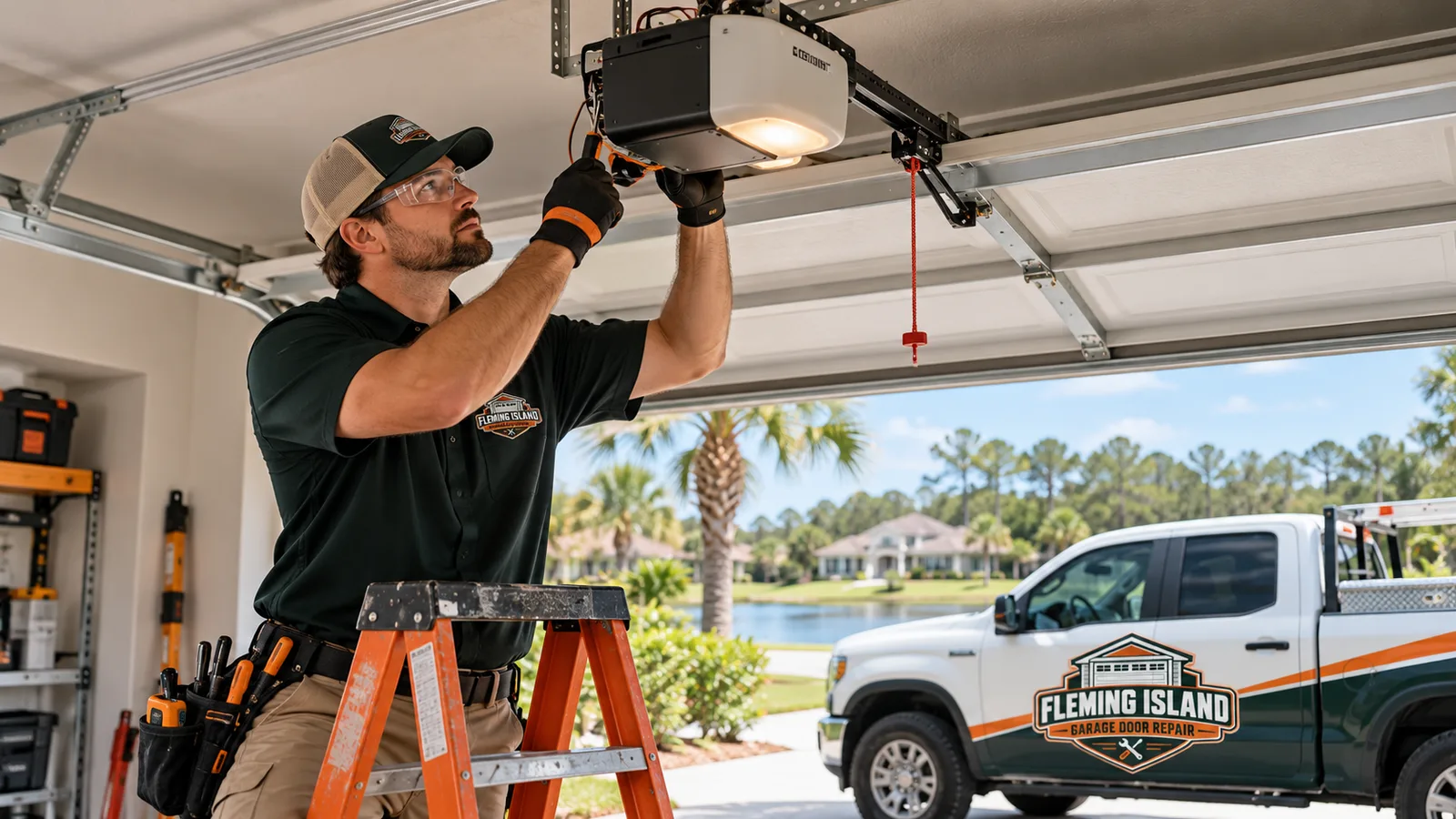
An opener fault may begin in the motor, controls, drive system or the garage door itself.
Complete system troubleshooting
When the motor runs but the door does not move, pressing the remote repeatedly will not solve the underlying fault. Garage door opener repair in Fleming Island, FL starts by determining whether the problem is in the opener, its controls or the door itself. Fleming Island Garage Door Repair troubleshoots chain-drive, belt-drive and wall-mount units, along with safety sensors, wall stations, keypads and remotes.
An opener is only one part of the operating system. A heavy, binding or poorly balanced door can strain the motor and damage gears or drive components. If the fault belongs to the door rather than the operator, garage door repair in Fleming Island addresses that larger mechanical scope. Separating those problems matters because replacing an opener will not correct damaged rollers, obstructed tracks or a door that cannot be moved safely by hand.
Fleming Island lies in humid the local area, where garages can experience heat, moisture and wind-driven debris. Those conditions can contribute to corroded terminals, dirty photo-eye lenses and unreliable outdoor keypad contacts. A proper inspection considers the full system instead of assuming every symptom means the motor has failed.
Find the actual fault
Similar symptoms can come from very different components. Diagnosis isolates the door, opener, controls and safety system before repair decisions are made.
A hum may point to a stripped drive gear, failed capacitor, jammed trolley or a door that is binding. The door and opener should be checked separately before parts are selected.
Misaligned photo eyes, dirty lenses, damaged sensor wiring or incorrect travel and force settings can cause unwanted reversal. Safety controls should be tested after any adjustment.
The cause may be a depleted battery, lost programming, radio interference, worn keypad contacts or a receiver problem. Testing more than one control helps isolate the fault.
Excessive slack, unusual noise, a damaged trolley or worn internal parts can stop the opener from transferring motor movement to the door.
Jackshaft-style units require checks at the torsion shaft, cable-tension monitor, door lock and travel controls. Their layout differs from a ceiling-mounted operator.
Loose low-voltage wiring, a failed wall station or a faulty logic board can produce intermittent operation even when the motor and door hardware remain functional.
System-first diagnosis
Diagnosis begins with the door closed and the area around it clear. The technician checks the power supply, wall control and opener lights, then looks for diagnostic codes where the model provides them. Sensor lenses, brackets and low-voltage wiring are inspected next. The photo eyes should face each other across the opening and remain securely mounted.
With the opener disconnected using the emergency-release handle, the door can be checked for smooth manual travel and reasonable balance. A door that drops, shoots upward or becomes difficult to move needs mechanical attention before the operator is returned to service. Homeowners should not loosen bottom brackets, lift cables or torsion-spring hardware; those parts can remain under substantial tension.
The inspection then moves to the rail, trolley, chain or belt, sprocket, travel limits and force controls. Internal components may include drive gears, capacitors, RPM sensors and logic boards, depending on the opener. Fleming Island Garage Door Repair can use those findings to distinguish a repairable control or drive fault from a motor assembly that has reached the point where replacement deserves consideration.
From symptoms to safety testing
Share what happens when the wall control, remote and keypad are used. Mention recent power interruptions, unusual sounds, flashing lights or intermittent behavior.
Fleming Island Garage Door Repair checks whether the door moves correctly by hand and whether the operator responds to its controls. This prevents an opener repair from masking a door problem.
Sensors, wiring, programming, travel settings and drive parts are tested as appropriate. The proposed scope should match the confirmed fault rather than the most obvious symptom.
The applicable component is adjusted, reprogrammed or replaced. Settings are made for the actual door instead of relying on arbitrary force increases.
The finished system is cycled through full opening and closing. Photo-eye reversal, wall controls, remotes and the emergency release are checked before the work is considered complete.
Choose from the diagnosis
Repair often makes sense when the opener has a specific, serviceable fault and otherwise operates the door correctly. Examples include misaligned safety sensors, damaged control wiring, a failed remote, incorrect programming, a worn gear or a replaceable capacitor. Availability and compatibility matter because opener parts are commonly tied to a manufacturer, model family and production generation.
Replacement may make more sense when several major components have failed, the required part is unavailable or the unit has recurring electrical trouble. It can also make sense when the existing opener lacks functions the homeowner now needs, such as an integrated battery backup or compatible wireless controls. Those preferences should be separated from the repair diagnosis so the choice is based on both condition and intended use.
A replacement operator still depends on a sound door. The track, rollers, hinges, cables, springs and door balance should be evaluated first. Installing a stronger motor is not a proper fix for a binding or overweight door, and increasing force settings can create a safety issue rather than correct the cause.
If the opener has become noisy, intermittent or unresponsive, arrange a diagnosis before repeated operation causes additional wear or leaves the door stuck at an inconvenient time.
CALL NOW: (904) 977-2180Homeowner guidance
A humming opener commonly has a jammed drive system, failed capacitor, stripped gear or a door that cannot move smoothly. Stop repeated attempts if the rail moves, the motor strains or the door appears crooked. Fleming Island Garage Door Repair can disconnect the operator, test the door manually and inspect the drive components to identify the fault.
Yes, many remote and keypad problems can be corrected without replacing the opener. The work may involve a battery, reprogramming, compatible replacement control, keypad contacts or receiver diagnosis. The opener's exact brand and model number help determine which controls can be paired with it.
The opener may be responding to blocked or misaligned photo eyes, damaged sensor wiring, incorrect travel settings or resistance in the door. In Fleming Island garages, dust, insects and wind-carried debris can collect around low-mounted sensors, but cleaning the lens will not fix a loose bracket or wiring fault.
Do not bypass or permanently defeat the photo-eye system. A blinking indicator usually means the sensors are obstructed, misaligned, disconnected or affected by a wiring problem. Objects should be removed from the opening, but bracket, wiring and alignment faults need proper correction followed by a reversal test.
It may be repairable, but the outlet, breaker, programming and electronic controls need to be checked before the logic board is blamed. the local area thunderstorms can disrupt power and opener settings. If there is a burning smell, visible damage or a repeatedly tripping breaker, leave the unit unplugged until it can be inspected.
Note the opener brand and model, what each control does, whether the motor makes noise and whether indicator lights blink in a pattern. Also mention whether the door can be operated manually. Do not attempt a manual test if the door is crooked, a cable is loose or spring hardware appears damaged.
Schedule opener service
A focused inspection of the opener, controls, sensors, and door can identify the failed part and show whether repair or replacement makes sense.